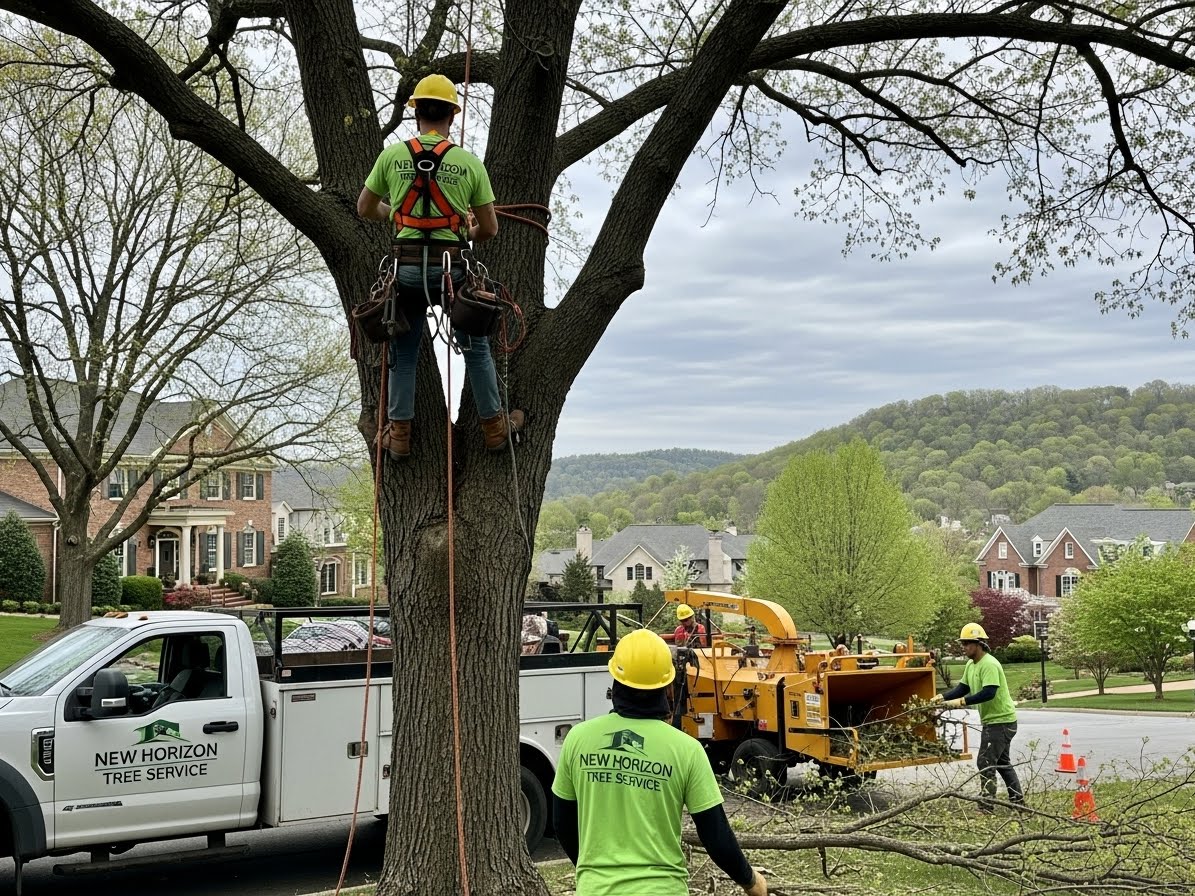
Winter reveals what summer foliage hides. When leaves fall from Nashville trees, structural problems, dead branches, and hazardous conditions become visible—if you know what to look for.
Most homeowners walk past dangerous trees every day without realizing the risk. A dead branch hanging 40 feet up. A crack in the trunk hidden behind ivy. Root damage from construction years ago that’s finally catching up with the tree. These hazards don’t announce themselves until something fails—usually during a storm when conditions are already dangerous.
As ISA Certified Arborists with over 35 years of experience serving Nashville, we’ve responded to countless tree failures that homeowners never saw coming. The tragedy is that most of these failures were predictable—the warning signs were there, just not recognized.
At New Horizon Tree Service, we’ve been identifying hazardous trees throughout Middle Tennessee since 1989. Here’s what you need to know to spot dangerous trees on your Nashville property before winter storms turn hidden problems into expensive—or dangerous—situations.
Visual Warning Signs of Dangerous Trees in Winter
Winter’s bare branches make it easier to spot problems. Here’s what to look for when walking your Nashville property.
Dead Branches and Limbs
Dead wood is the most obvious hazard and the easiest to spot in winter. Dead branches don’t have small twigs at the ends—they terminate abruptly. The bark is often loose, cracked, or missing entirely. When you look at the branch junction where it connects to the trunk, dead branches show a clear color difference from living wood.
Dead branches are brittle and unpredictable. They don’t bend under ice weight—they snap. Large dead limbs hanging over homes, driveways, or areas where people gather are immediate hazards requiring professional tree removal or trimming.
Cracks and Splits in Trunks or Major Limbs
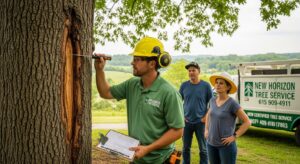
Walk completely around each tree on your property and look for cracks. Vertical cracks in the trunk, splits where major branches meet, or separation between multiple trunks all indicate structural failure in progress.
Some cracks are obvious—inches wide and visible from across the yard. Others are subtle: hairline splits that are easy to miss if you’re not looking carefully. Both types are serious. Trees don’t heal cracks—they only get worse over time and under stress from ice, wind, or heavy foliage.
If you spot cracks in trees throughout Nashville neighborhoods like Belle Meade, Green Hills, or East Nashville, call 615-200-5523 for professional assessment. ISA Certified Arborists can determine whether the tree can be saved with cabling or requires removal.
Hanging or Broken Branches (Widow Makers)
‘Widow makers’ are branches that have broken but haven’t fallen—they’re caught in the canopy, hanging by bark strips or wedged between other branches. These are among the most dangerous tree hazards because they can fall without warning, especially on windy days or when ice melts.
Look up into tree canopies regularly. Hanging branches are obvious once you notice them, but most homeowners never look up. If you see any branch that’s not attached properly or hanging at an odd angle, that’s a widow maker requiring immediate professional attention.
Unusual Lean or Recent Tilt
Some trees naturally lean—that’s not necessarily dangerous if they’ve leaned that way for decades. What’s concerning is recent lean or a tree that’s tilting more than it used to. Look for these additional signs:
• Exposed roots on the side opposite the lean
• Soil lifting or cracking near the base
• Recent changes in lean angle after storms
• The tree leaning toward your home or other structures
Trees that are actively leaning more each year will eventually fall. The question is whether they fall on their own schedule or on yours. Professional tree service can remove leaning trees safely before they become emergencies.
Root and Trunk Base Problems That Signal Danger
What’s happening at ground level is just as important as what you see in the canopy. Root problems cause entire tree failures, not just branch loss.
Fungal Growth and Mushrooms Around the Base
Mushrooms growing from the trunk base or from roots indicate internal decay. The mushrooms you see are just the fruiting bodies—the actual fungal network is inside the tree, eating away at structural wood.
Common fungal indicators in Nashville include shelf fungi (bracket-shaped growths), honey mushrooms (clusters of tan mushrooms), and conks (hard, woody fungal bodies). Any fungal growth on or near the trunk suggests the tree has significant internal decay that compromises stability.
Root Damage from Construction or Grading
Construction damage often doesn’t show immediately. A tree whose roots were severed during driveway installation five years ago might only now be showing signs of instability. Likewise, changes in soil grade—adding or removing soil around trees—damages roots and leads to long-term decline.
Signs of root damage include thinning canopy on one side, overall decline in tree vigor, and reduced leaf size or color. If your property had construction within the tree’s drip line (the area under the canopy) in the past 3-5 years, have trees professionally evaluated.
Decay at the Trunk Base
Soft, spongy, or crumbling wood at the trunk base indicates advanced decay. You can test this by pushing on the bark with your hand—if it feels soft or punches through easily, there’s serious internal rot.
Cavities at the base are also concerning. Some trees live with cavities for years, but they reduce structural strength. Large cavities (more than 30% of trunk circumference) mean the tree has lost significant support and could fail during storms.
Professional tree trimming can sometimes extend the life of trees with decay by reducing weight in the canopy. However, advanced decay often means removal is the safer choice.
Species-Specific Hazards Common in Nashville
Certain tree species common in Nashville neighborhoods have predictable failure patterns. Knowing which trees to watch closely helps target your inspections.
Bradford Pear: Nashville’s Most Dangerous Tree
If you have Bradford pears on your property, they should be your first priority for winter inspection. These trees have weak wood and tight branch angles that split easily. By age 15-20, most Bradford pears have structural problems.
Look for vertical splits where branches meet the trunk, branches hanging at unusual angles, or recent storm damage. Bradford pears near homes in Brentwood, Franklin, and throughout Davidson County are accidents waiting to happen. Many arborists recommend proactive removal of Bradford pears over age 15.
Silver Maple and Box Elder: Brittle Wood Issues
Silver maples and box elders grow fast but have brittle wood that breaks easily in ice storms. These trees are common in newer developments and along creeks throughout Nashville and Goodlettsville.
Check silver maples for dead branches, weak unions, and excessive lean. These trees benefit from regular maintenance trimming to reduce weight and remove problematic branches before they fail.
Large Mature Oaks: Hidden Decay
Heritage oaks in established neighborhoods like Belle Meade are valuable assets, but older specimens can have hidden decay. Large oaks can lose 70% of their internal wood to rot while still looking healthy from the outside.
ISA Certified Arborists use resistance drilling and other diagnostic techniques to assess internal condition. If you have valuable mature oaks, professional evaluation every 2-3 years helps catch problems before they become dangerous.
When to Call Professional Arborists for Tree Assessment
Some tree problems are obvious. Others require professional expertise to evaluate properly.
Clear Immediate Hazards
Call immediately if you see:
• Large dead branches over structures or activity areas
• Obvious cracks in trunks or major limbs
• Hanging branches caught in canopy (widow makers)
• Recent lean or soil lifting around roots
• Trees damaged in recent storms
These situations require professional assessment within days, not weeks. Call 615-200-5523 for FREE evaluation and expert recommendations.
Situations Requiring Expert Diagnosis
Some problems aren’t obvious to homeowners but are clear to trained arborists:
• Internal decay (requires resistance drilling or sonic testing)
• Root damage from construction (needs soil excavation)
• Disease identification (many diseases look similar)
• Weak branch unions in valuable trees (cabling might help)
• Whether declining trees can be saved or should be removed
Our ISA Certified Arborists have diagnostic tools and 35+ years of experience evaluating Nashville trees. We provide honest assessments—if a tree can be saved, we’ll tell you. If it’s safer to remove it, we’ll explain why.
Annual Winter Inspections
Even if you don’t see obvious problems, annual professional inspections provide peace of mind. We catch developing issues before they become emergencies, recommend preventive trimming, and track changes in tree condition over time.
Winter inspections are particularly valuable because bare branches reveal structure clearly. For properties with multiple mature trees, comprehensive assessment helps prioritize work and budget for tree care over time.
Preventing Winter Tree Hazards on Your Nashville Property
The best approach to dangerous trees is preventing problems before they develop.
Proactive Trimming Before Winter Storms
December trimming removes dead branches, reduces ice-catching weight in canopies, and eliminates weak unions before ice storms test them. This preventive work costs far less than emergency storm damage removal.
We serve all of Middle Tennessee including Hendersonville, Nashville, Goodlettsville, Brentwood, and surrounding communities with professional winter tree care. Our work follows ISA standards and focuses on long-term tree health, not just removing branches.
Remove Problem Trees Before They Fail
Not every tree deserves saving. Bradford pears over age 15, trees with extensive decay, and specimens with major structural problems are candidates for removal. Scheduled removal on your timeline is safer and cheaper than emergency removal after failure.
Our stump grinding services ensure removed trees leave no trace, allowing you to replant with safer species or reclaim yard space for other uses.
Document Tree Condition for Insurance
Take photos of your trees throughout the year. If storm damage occurs, having before-photos helps with insurance claims. Documentation also helps track changes—photos from this winter compared to last winter can reveal developing lean, declining canopy density, or other changes requiring attention.
What Happens During Professional Tree Hazard Assessment
Understanding the assessment process helps you know what to expect when you call for evaluation.
We start by walking your entire property, examining every tree from multiple angles. We look at roots, trunk, scaffold branches, and fine branches throughout the canopy. We note species, age, condition, and proximity to structures or activity areas.
For trees with potential problems, we use diagnostic tools. Resistance drilling tests internal decay. We probe cavities to determine extent. We evaluate soil conditions around roots and check for damage from construction, grading, or foot traffic.
After assessment, we provide clear recommendations prioritized by urgency and risk. Immediate hazards are identified separately from preventive work that can be scheduled later. We explain what’s wrong with each problem tree, what’s likely to happen if not addressed, and what options exist for remediation.
All assessments include FREE written estimates for recommended work. You get transparent pricing, timeline expectations, and clear explanations of why we’re recommending each service.
Protect Your Nashville Property from Dangerous Trees This Winter
Winter reveals tree hazards that summer foliage hides. The difference between a safe property and a dangerous one often comes down to whether problems are caught early—before storms turn structural weakness into expensive damage or dangerous situations.
At New Horizon Tree Service, we’ve been protecting Nashville properties since 1989. Our ISA Certified Arborists know Middle Tennessee trees, understand species-specific hazards, and use professional diagnostic tools to assess tree condition accurately.
We’re fully licensed, bonded, and insured with the equipment and expertise to handle any tree situation safely. Whether you need assessment of specific concerns, comprehensive property evaluation, or immediate removal of identified hazards, we provide honest recommendations and professional service.
Don’t wait for the next ice storm to discover which trees on your property are dangerous. Call New Horizon Tree Service at 615-200-5523 today for your FREE winter tree assessment. We’ll identify any hazards, explain what needs attention, and provide clear pricing for recommended work.
Winter tree safety starts with knowing what to look for and having the judgment to call professionals when needed. Your family’s safety and your property’s protection are worth a phone call.
Quick FAQs: Spotting Dangerous Trees in Winter
What are the most obvious signs a tree is dangerous?
Dead branches, cracks in trunk or major limbs, hanging branches caught in canopy, and recent lean are immediate red flags. Any of these situations requires professional assessment within days.
How often should Nashville trees be professionally inspected?
Annual winter inspections are ideal for properties with mature trees. Young, healthy trees can go 2-3 years between professional assessments. After major storms, immediate post-storm evaluation identifies damage requiring attention.
Can a tree that looks healthy suddenly become dangerous?
Yes. Internal decay isn’t visible from outside. Root damage from old construction may take years to manifest. Storms can create new hazards overnight. This is why professional assessment matters—ISA Certified Arborists identify problems homeowners miss.
What should I do if I spot a dangerous tree on my property?
Call 615-200-5523 immediately for FREE professional assessment. Keep people away from the danger area until evaluated. Don’t attempt to remove hazardous trees yourself—this work requires professional expertise and equipment.
Call 615-200-5523 today for your FREE estimate. We’ll assess your property, identify any hazards, and provide clear recommendations for protecting your family during the Christmas season and beyond.