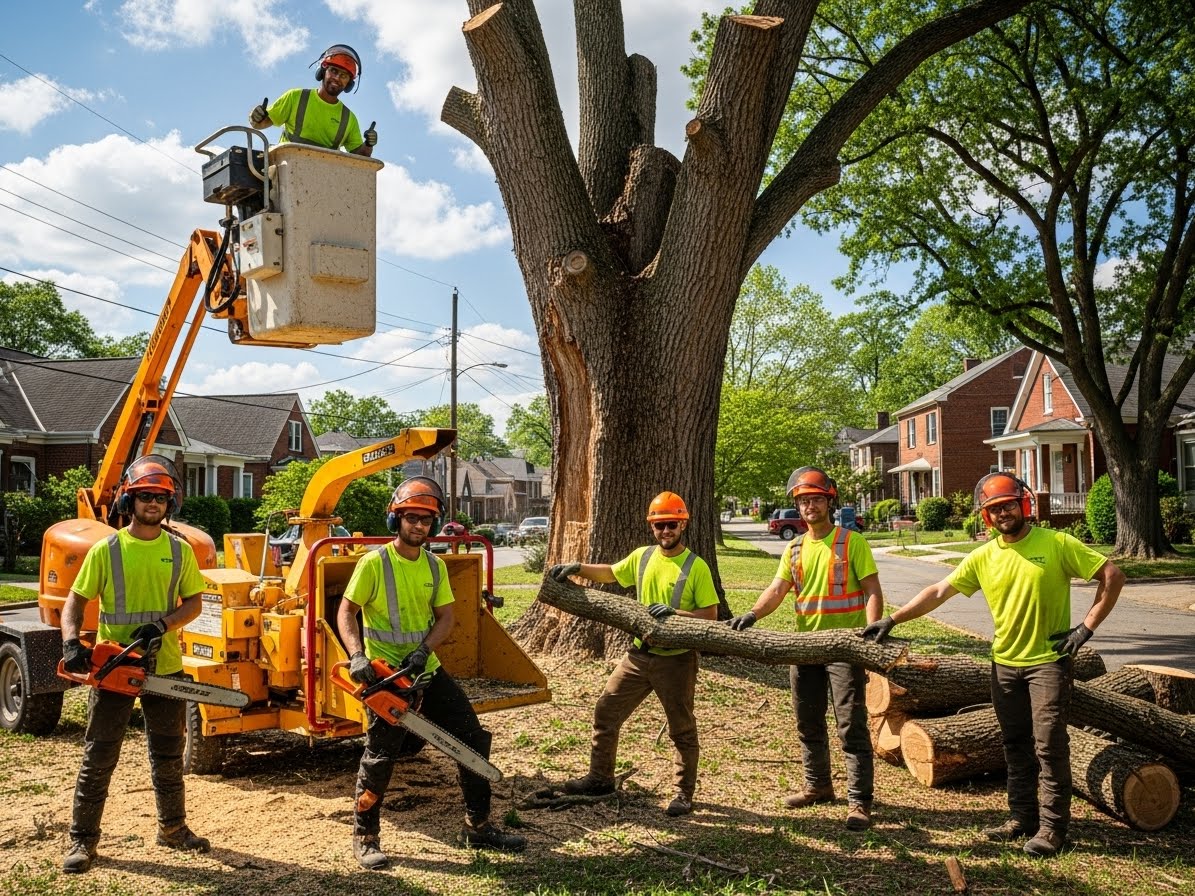
If you’ve been putting off tree trimming for your Nashville property, December might be exactly the right time to schedule it. While most homeowners think of spring as tree care season, professional arborists know that winter—specifically the dormant season—offers the best conditions for trimming and pruning most tree species.
There’s real science behind this timing. When trees go dormant in winter, they essentially pause their growth and conserve energy. This natural slowdown creates the ideal window for structural pruning, corrective trimming, and health maintenance that sets your trees up for vigorous spring growth.
At New Horizon Tree Service, we’ve been trimming trees throughout Nashville and Middle Tennessee since 1989. As ISA Certified Arborists with over 35 years of experience, we’ve learned that winter trimming isn’t just about convenience—it’s about giving your trees the best possible care at the optimal time in their annual cycle.
Let me explain why December through early February is the sweet spot for tree trimming in Nashville, which trees benefit most, and what you should know before scheduling your winter tree service.
The Science Behind Dormant Season Tree Trimming
Understanding why winter trimming works better requires knowing a bit about how trees function throughout the year.
What Dormancy Means for Trees
After the first hard freeze in Middle Tennessee—typically late November or early December—deciduous trees enter dormancy. Their leaves have fallen, sap flow slows to a trickle, and energy reserves move from branches into roots for winter storage.
Think of dormancy as a tree’s hibernation period. The tree isn’t dead or even sleeping—it’s conserving resources and waiting for spring. During this time, pruning cuts heal more efficiently because the tree isn’t trying to support active leaf growth or move nutrients through the canopy.
Reduced Stress on Trees
When you trim a tree during the growing season, you’re removing leaves that produce food through photosynthesis. The tree has invested energy in growing those leaves, and removing them forces it to redirect resources to heal the pruning wounds while still trying to grow.
Winter trimming eliminates this stress. Without leaves to support, the tree can focus all its energy on sealing pruning cuts properly. Come spring, instead of recovering from recent pruning, the tree bursts into vigorous new growth from a properly structured framework.
Better Wound Closure
Trees don’t heal wounds the way animals do. They compartmentalize damage by forming a barrier of specialized cells around the wound. This process, called CODIT (Compartmentalization of Decay in Trees), works most efficiently during dormancy.
ISA Certified Arborists understand this biological process and time pruning cuts accordingly. Winter trimming, combined with proper cutting techniques, gives trees the best chance for complete, healthy wound closure before the stress of spring growth begins.
Practical Benefits of Winter Tree Trimming in Nashville
Beyond the biological advantages, winter trimming offers several practical benefits for Nashville homeowners.
Clear Visibility of Tree Structure
Without leaves obscuring our view, we can see exactly how branches are structured. We identify crossing branches, weak unions, dead wood, and structural problems that are invisible in summer’s full canopy.
This visibility is crucial for properties in neighborhoods like Belle Meade, Green Hills, and East Nashville where mature trees are valuable landscape features. We can make precise cuts that improve structure while maintaining the tree’s natural form—something that’s much harder to do when we can’t see what we’re working with.
Reduced Disease Transmission
Many tree diseases spread through fresh pruning cuts. Oak wilt, fire blight, and various fungal infections rely on insects, rain splash, or airborne spores to enter trees through wounds.
In winter, disease pressure drops dramatically. Insects are dormant, fungal spores are inactive in cold weather, and many pathogens can’t survive freezing temperatures. This makes December through February the safest time to prune trees susceptible to disease—particularly oaks, which we never trim during the growing season due to oak wilt risk.
Easier Cleanup and Less Mess
Trimming bare branches creates far less debris than cutting through summer’s full foliage. No leaves means faster cleanup, easier handling of cut material, and cleaner worksites.
For your property, this means we’re in and out more quickly, with less impact on your lawn and landscaping. Winter-dormant grass handles equipment traffic better than actively growing turf, and there’s no worry about damaging spring flower beds or fall plantings.
Better Scheduling and Availability
Spring and summer are our busiest seasons. Everyone wants tree work done when the weather is pleasant. Winter means better availability and more flexible scheduling.
If you call us in December, we can usually schedule your trimming within days rather than weeks. You get more personalized attention, and we’re not rushing from one job to the next. For immediate scheduling, call 615-200-5523 and we’ll provide a FREE estimate and get you on the calendar quickly.
Which Nashville Trees Benefit Most from Winter Trimming
While most deciduous trees do well with dormant season pruning, some species particularly benefit from winter work.
Oaks (Red Oak and White Oak)
Oak wilt disease is fatal to oaks and spreads rapidly through pruning wounds made during the growing season. The disease-carrying beetles that transmit oak wilt are active from April through June—exactly when homeowners often think about tree trimming.
We only trim oaks during deep dormancy—December through February in Nashville. If you have mature oaks on your property in neighborhoods like Belle Meade or Brentwood, winter is the sole safe window for pruning. The heritage oaks that make these neighborhoods beautiful deserve this level of careful timing.
Maples (Sugar Maple, Red Maple, Silver Maple)
Maples are heavy bleeders—they produce copious sap flow in late winter and spring. While this sap flow doesn’t harm the tree, it’s messy and can be alarming to homeowners who aren’t expecting it.
Trimming maples in December, before sap flow begins, avoids this issue. The wounds still seal properly, but you don’t deal with sap dripping on sidewalks, cars, or patio furniture. Sugar maples, common throughout Nashville’s established neighborhoods, particularly benefit from early winter pruning.
Fruit Trees (If You Have Them)
If your Nashville property includes ornamental or productive fruit trees—pears, apples, or stone fruits—dormant season pruning is standard practice. It controls size, improves fruit production, and allows us to see the branch structure clearly.
The exception is stone fruits like cherry and peach, which are best trimmed in late winter just before bud break to minimize disease risk. We’ll time this work appropriately based on weather patterns each year.
Shade Trees (Most Species)
Common Nashville shade trees—tulip poplars, sweetgums, hickories, and most others—all trim beautifully in winter. These species tolerate dormant season pruning well and respond with strong spring growth from properly structured branches.
What Professional Winter Tree Trimming Includes
Winter tree trimming from ISA Certified Arborists isn’t just cutting branches. It’s comprehensive tree health management done at the optimal time.
Structural Pruning
We evaluate your tree’s structure and remove branches that create problems. This includes removing crossing branches that rub and create wounds, eliminating weak unions that could split in storms, reducing end weight on long horizontal limbs, and establishing proper spacing for good air circulation.
Proper structural pruning when trees are young prevents major problems later. For mature trees, structural pruning addresses existing weaknesses before they fail. Either way, winter’s clear visibility lets us see exactly what needs attention.
Deadwood Removal
Dead branches don’t heal and are more likely to fall during storms. Winter makes dead wood easier to spot—dead branches are brittle, lack small twigs, and have loose bark.
We remove all deadwood we can safely reach during trimming. This is particularly important before ice storm season, which typically peaks in January and February across Middle Tennessee. Properties in areas like East Nashville, Germantown, and Sylvan Park with trees overhanging homes or power lines particularly benefit from thorough deadwood removal.
Crown Thinning and Shaping
Dense tree canopies can be problems in Nashville’s summer storms. Wind can’t pass through thick foliage, creating sail effect that increases storm damage risk. Crown thinning—selective removal of branches to reduce density—allows wind to pass through more easily.
We also shape trees to maintain their natural form while addressing specific issues like branches encroaching on roofs, rubbing against homes, or hanging over driveways. This shaping work is much more precise in winter when we can see exactly what we’re doing.
Clearance Pruning
Trees grow. Branches that cleared your roof five years ago might be touching it now. Limbs that used to hang well above the sidewalk might be at head height as the tree matures and branches droop under their own weight.
We establish proper clearance from structures, walkways, driveways, and utility lines. This protects both your property and the tree itself from damage caused by constant contact or rubbing.
Cost and Timing: What to Expect for Winter Tree Trimming
Let’s address the practical questions Nashville homeowners ask about winter tree trimming.
Typical Costs for Nashville Properties
Tree trimming costs vary based on tree size, number of trees, complexity of the work, and access for equipment. Here’s what most Nashville homeowners can expect:
Small trees (under 30 feet) typically cost $200-500 for basic trimming. These are ornamental trees, young shade trees, or small specimens that don’t require extensive climbing or equipment.
Medium trees (30-60 feet) usually run $400-900 depending on how much work is needed. This includes most residential shade trees in their first 20-30 years of growth.
Large mature trees (60+ feet) often cost $800-1,500 or more. Heritage oaks, large maples, and mature shade trees require more time, expertise, and equipment. Properties in established neighborhoods with decades-old trees should budget accordingly.
We provide FREE estimates with detailed explanations of what work we recommend and why. Call 615-200-5523 and we’ll schedule your consultation. There’s no pressure and no hidden fees—you’ll know exactly what to expect before we start any work.
Best Timing Within Winter
December through early February is the ideal window. We avoid trimming during extreme cold snaps (below 20°F) because frozen wood can split unpredictably, but otherwise, winter weather doesn’t stop professional tree work.
Early December is excellent—trees are dormant but weather is usually mild. January works well for most species. By late February, some trees start waking up, so we prefer to complete most pruning before then.
How Long Does Winter Trimming Take?
Most residential properties take half a day to a full day depending on number and size of trees. A single large tree might take 2-4 hours. Multiple trees or extensive work could require a full day or multiple visits.
Winter’s shorter days mean we work roughly 8:30 AM to 4:30 PM. We’re efficient—our crews have been working together for years and know exactly what needs doing. But we never rush. Proper pruning cuts and safe work practices take the time they take.
Choosing the Right Nashville Tree Service for Winter Work
Not everyone who owns a chainsaw understands proper tree care. Here’s what matters when choosing a company for winter trimming.
ISA certification: ISA Certified Arborists understand tree biology, proper pruning techniques, and species-specific needs. Winter trimming requires knowing which cuts to make and which to avoid. Certification means we’ve studied this science and passed rigorous exams on proper tree care.
Experience with local trees: We’ve been working with Nashville trees since 1989. We know which species thrive here, which diseases are prevalent, and how Tennessee weather affects tree health. That experience matters when making pruning decisions that impact your trees for decades.
Proper insurance: Tree work is inherently dangerous. If someone isn’t properly insured and gets hurt or damages property, you could be liable. We’re fully licensed, bonded, and insured with both liability and workers’ compensation coverage.
Professional equipment: Proper tree trimming requires professional-grade equipment—commercial chippers, climbing gear meeting ANSI standards, and well-maintained chainsaws. Cheap equipment or lack of proper tools slows work and increases safety risks.
Proven track record: Our 4.7-star rating from 70+ Nashville-area families reflects decades of quality work. When you’re trusting someone with valuable mature trees on your property, reputation matters.
What to Do Before Winter Tree Trimming
A few simple steps make your winter trimming project go smoothly.
Schedule early: Don’t wait until January. December fills up, and scheduling early ensures you get trimming done during the optimal window. Call us at 615-200-5523 to book your FREE consultation.
Clear work areas: Move vehicles, outdoor furniture, grills, and anything else from under trees. This gives us safe working space and protects your belongings from falling branches or wood chips.
Communicate your concerns: Tell us what’s bothering you about your trees. Branches touching the roof? Too much shade on your lawn? Tree blocking your view? We’ll address your specific concerns while maintaining tree health.
Discuss access: We need to know about locked gates, narrow side yards, underground utilities, or other access issues. Letting us know upfront helps us bring the right equipment.
Plan for wood disposal: We haul away all branches and debris—that’s included in our service. If you want to keep firewood, let us know and we’ll cut it to length and stack it for you.
FAQ: Winter Tree Trimming in Nashville
Is it really safe to trim trees in cold weather?
Yes, dormant season trimming is not only safe—it’s preferred for most tree species. Trees are dormant and not actively growing, which means pruning causes minimal stress. The only limitation is extreme cold below 20°F, when frozen wood becomes brittle and unpredictable to cut. Most Nashville winter days are well above this threshold. We’ve been doing winter tree work throughout Middle Tennessee for over 35 years, and it’s the ideal time for the majority of trimming projects. Trees respond beautifully to dormant season pruning, bursting into vigorous spring growth from properly structured branches.
Will winter trimming harm my trees?
Winter trimming is actually less stressful for trees than growing season pruning. When trees are dormant, they’re not supporting leaf growth or moving nutrients through the canopy. This means they can dedicate all their energy to properly sealing pruning wounds through compartmentalization. ISA Certified Arborists use proper cutting techniques that work with the tree’s natural wound response. The result is clean wound closure and strong spring growth. Poor pruning techniques harm trees regardless of season—which is why working with qualified professionals matters more than timing alone.
How much does tree trimming cost in Nashville?
Tree trimming costs typically range from $200-500 for small trees, $400-900 for medium trees, and $800-1,500+ for large mature specimens. The exact cost depends on tree size, the amount of work needed, equipment requirements, and access factors. Multiple trees often receive volume pricing. At New Horizon Tree Service, we provide FREE estimates with detailed explanations of recommended work. Call 615-200-5523 and we’ll schedule your consultation. You’ll receive transparent pricing with no hidden fees before any work begins.
Do you trim trees in Goodlettsville, Brentwood, and Franklin too?
Yes, we serve all of Nashville and surrounding communities throughout Middle Tennessee. Our service area includes Goodlettsville, Brentwood, Franklin, Hendersonville, and all surrounding areas. Since 1989, we’ve been the trusted choice for professional tree care throughout Davidson County, Williamson County, and beyond. We bring the same expertise, professional equipment, and quality service to every property we serve, regardless of location.
Schedule Your Winter Tree Trimming Today
December is the ideal time for tree trimming in Nashville. Your trees are dormant and ready for the structural pruning, deadwood removal, and health maintenance that sets them up for beautiful spring growth.
At New Horizon Tree Service, winter tree care is our specialty. Our ISA Certified Arborists understand the science behind dormant season pruning and use techniques that work with your trees’ natural biology. We’ve been serving Nashville families since 1989, and our 4.7-star rating reflects the quality and professionalism we bring to every project.
Whether you have mature oaks that need careful structural work, maples requiring pruning before sap flow begins, or shade trees that simply need shaping and deadwood removal, we have the expertise to do the job right. We’re licensed, bonded, and insured, with professional equipment and experienced crews who understand Middle Tennessee trees.
Don’t wait until spring when everyone wants tree work and scheduling becomes difficult. Call New Horizon Tree Service at 615-200-5523 today for your FREE estimate. We’ll assess your trees, explain what work we recommend and why, and provide detailed pricing with no hidden fees.
We serve all of Nashville—from Belle Meade to East Nashville, Green Hills to Germantown, and everywhere in between—plus surrounding communities throughout Middle Tennessee. Your trees deserve professional care from arborists who understand dormant season biology and have decades of local experience.
ISA Certified Arborists. Licensed, bonded, and insured. Serving Nashville since 1989. FREE estimates on all tree trimming projects.
Give your trees the gift of professional winter care. They’ll thank you with vigorous growth, beautiful form, and decades of healthy service to your property.