What Tree Removal Actually Costs in Nashville
You’ve got a tree that needs to come down. Maybe it’s dead, maybe it’s leaning toward the house, maybe you just need the space. The first question is always the same: how much is this going to cost?
After 35 years of tree removal work in Nashville, we can tell you the honest answer: it depends. But “it depends” isn’t helpful when you’re trying to budget. So here’s a detailed breakdown of what tree removal actually costs in Nashville and Middle Tennessee, with real numbers, not vague ranges.
Average Tree Removal Cost by Size
Tree size is the single biggest factor in pricing. Here’s what Nashville homeowners typically pay in 2026:
- Small trees (under 30 feet): $300-$700. Ornamentals, young shade trees, volunteer seedlings. Usually straightforward and done in 1-2 hours.
- Medium trees (30-60 feet): $700-$1, 500. This covers most residential trees, red maples, hackberries, smaller oaks. Half-day jobs.
- Large trees (60-80 feet): $1, 500-$3, 000. Mature tulip poplars, white oaks, sweetgums. These take a full crew and most of a day.
- Very large trees (80+ feet): $3, 000-$5, 000+. Old-growth oaks, massive poplars, trees requiring crane access. Full-day or multi-day projects.
The Nashville metro average for a single residential tree removal is around $1, 200-$1, 800. That covers a typical medium-to-large tree in a reasonably accessible yard.
What Makes One Tree More Expensive Than Another
Two 50-foot trees on the same street can have very different removal costs. Here’s what moves the needle:
Species and Wood Density
Hardwoods like white oak and hickory take longer to cut, require more chainsaw fuel, and are heavier to lower on ropes. Softwoods like tulip poplar and pine are faster to work with. A 60-foot white oak will typically cost 20-30% more than a 60-foot tulip poplar of the same diameter.
Proximity to Structures
A tree standing alone in the middle of a yard can be felled in one piece, fast and efficient. A tree next to your house, garage, fence, or power lines requires sectional dismantling. Our crew climbs the tree, cuts it apart piece by piece, and lowers each section on ropes. This controlled approach keeps your property safe but takes significantly more time. Expect a $300-$800 premium for trees within 20 feet of a structure.
Access and Equipment Needs
Can a truck and chipper get close to the tree? Or does everything need to be hand-carried through a narrow side yard? Limited access means more manual labor and more time. Backyard trees with no truck access typically add $200-$500 to the cost.
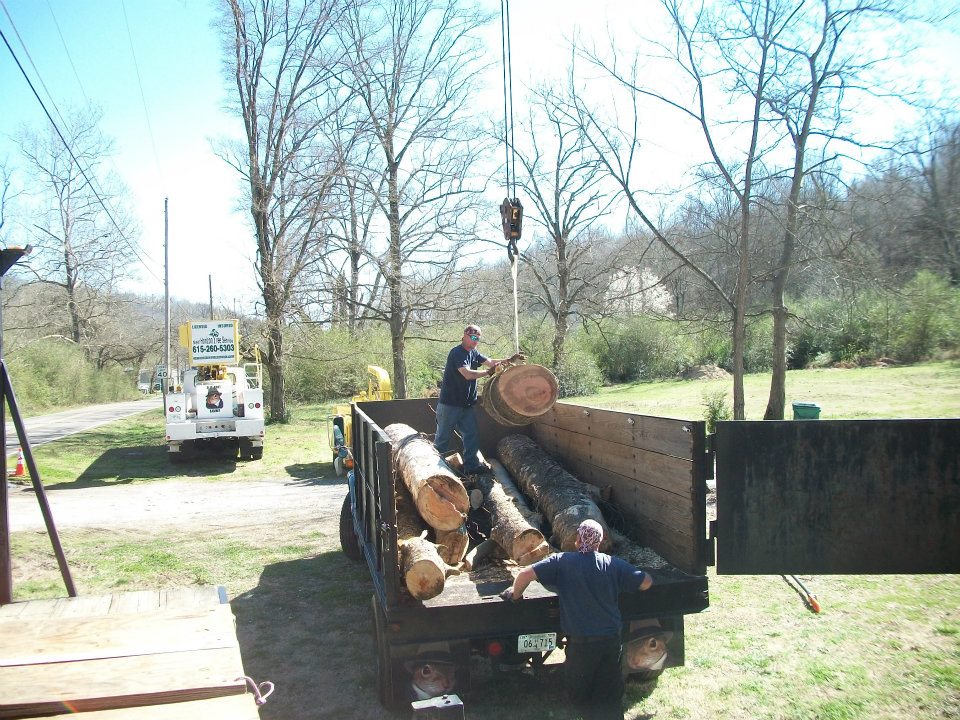
For the largest and most complex jobs, a crane may be needed. Crane-assisted removal adds $500-$2, 000 to the total but can actually save money on very large trees by reducing the hours of climbing and rigging work.
Tree Condition
Dead trees and trees with significant decay are more dangerous to remove. Dead wood is unpredictable, branches can snap without warning, and the trunk may not hold a climber’s weight. Ironically, removing a dead tree often costs more than removing a healthy one because of the extra safety precautions required.
Emergency vs. Scheduled Removal
Scheduled removals during normal business hours are the most affordable. Emergency tree removal, after a storm, on weekends, or after hours, carries a premium of 25-50% due to the urgency and after-hours crew mobilization.
Nashville-Specific Cost Factors
Every market is a little different. Here’s what makes Nashville tree removal unique:
Clay soil: Davidson County’s heavy clay holds root systems tight. Stump grinding and root cleanup take a bit longer here than in sandy-soil regions.
Mature tree canopy: Nashville has an exceptionally dense urban tree canopy. Many properties in neighborhoods like Belle Meade, Green Hills, and East Nashville have large, mature trees that are 80-100+ years old. These are the expensive removals.
Permit requirements: Nashville-Davidson County may require permits for removing trees above a certain size on residential and commercial properties, especially in urban overlay districts. The permit itself isn’t expensive, but the process adds a few days to the timeline.
Seasonal demand: Nashville’s busiest tree removal season is after winter ice storms (January-March) and after spring severe weather. During peak demand, wait times increase but prices generally stay stable with reputable companies.
What’s Included in the Price (and What’s Not)
When you get a tree removal estimate, make sure you understand what’s covered:
Typically included:
- Felling or sectional dismantling of the tree
- Limb chipping on-site
- Debris cleanup and haul-away
- Cutting the trunk into manageable sections
Usually extra:
- Stump grinding ($100-$400 depending on size)
- Firewood splitting and stacking
- Hauling trunk wood off-site (some companies leave cut rounds)
- Root removal or excavation
Always ask what’s included before signing anything. Our estimates at New Horizon Tree Service cover removal, chipping, cleanup, and debris hauling, with stump grinding priced separately so you can decide.
Is DIY Tree Removal a Good Idea?
For very small trees, a 15-foot ornamental or a volunteer sapling, a handy homeowner with a chainsaw and safety gear can handle it. Beyond that, the answer is no.
Here’s why we advise against DIY for anything bigger than a small tree:
- Falling trees are unpredictable. Even experienced loggers misjudge how a tree will fall. In a residential yard with houses, fences, cars, and power lines, there’s very little room for error.
- Chainsaw injuries are serious. The CDC reports over 36, 000 chainsaw injuries per year in the US, many from homeowners attempting tree work.
- Power line contact is potentially fatal. A tree or branch touching a power line can energize the entire tree and the ground around it.
- Property damage liability. If a DIY tree removal damages your neighbor’s property, your homeowner’s insurance may not cover it since you were performing professional-grade work without proper qualifications.
Professional crews have the training, equipment, and insurance to handle the risks. The cost of hiring a pro is almost always less than the cost of fixing a mistake.
How to Get Fair Tree Removal Estimates
Getting the right price starts with getting the right estimates. Here’s what we tell Nashville homeowners:
Get 2-3 estimates. Price comparison helps you identify outliers. If one quote is dramatically lower than the others, ask why, they may be cutting corners on insurance, cleanup, or safety.
Insist on an on-site estimate. Any company that quotes a price over the phone without seeing the tree is guessing. Tree removal pricing requires seeing the tree, the access, and the surroundings in person.
Verify insurance. Ask for a certificate of liability insurance. Call the insurance company to confirm it’s current. This is non-negotiable, if an uninsured crew damages your property or a worker gets hurt, you could be liable.
Ask about permits. A reputable Nashville tree service will know whether your tree requires a permit and handle the process.
Get the estimate in writing. A handshake quote means nothing if there’s a dispute later. Written estimates should detail the scope of work, what’s included, the total price, and the timeline.
When Tree Removal Is Worth the Investment
Tree removal isn’t cheap, but there are situations where delaying it costs you more:
Dead or dying trees: A dead tree that falls on your house during a storm can cause $10, 000-$50, 000+ in damage. Removing it proactively for $1, 500-$3, 000 is the obvious choice.
Trees damaging your foundation: Root systems from aggressive species like silver maple and sweetgum can crack foundations and disrupt plumbing. The longer you wait, the more expensive the structural repair becomes.
Trees blocking construction: If you’re adding a deck, pool, or addition, removing a tree before construction starts is far cheaper than working around it or removing it mid-project.
Insurance risk: If you know a tree is hazardous and don’t remove it, your insurance company may deny a claim if it causes damage. Documented neglect can void your coverage.
What to Expect on Removal Day
Here’s how a typical removal day goes with our crew:
Morning arrival. We show up with a chipper, trucks, climbing gear, and chainsaws. The first thing we do is walk the site and confirm the plan with you.
Setup and safety zone. We establish a drop zone, protect nearby landscaping with tarps if needed, and set up our rigging.
Top-down removal. For trees near structures, the climber starts at the top and works down, cutting limbs and lowering them on ropes. Each piece goes through the chipper or gets stacked for removal.
Trunk sections. Once the limbs are gone, the trunk comes down in sections. Large trunks are cut into rounds and either hauled away or left for the homeowner (firewood).
Cleanup. We chip all limbs, rake the area, and haul everything off-site. The only thing left is a stump at ground level (unless you’ve added stump grinding).
Most single-tree removals are done in half a day. Large or complex trees may take a full day.
Frequently Asked Questions
Does homeowners insurance cover tree removal?
If a tree falls on a covered structure (house, garage, shed), most policies cover the removal cost. Trees that fall in the yard without hitting a structure are often not covered or have a lower cap. Check your policy or call your agent before you need to file a claim.
What is the cheapest time of year to remove a tree?
Late fall through early winter (November-December) tends to be the least busy season for Nashville tree services. You may get slightly better pricing and faster scheduling during this window. Avoid spring and post-storm periods when demand is highest.
Can I negotiate tree removal prices?
Bundling services is the best way to get a better rate. Adding stump grinding, removing multiple trees, or scheduling during a slower period all give the company reason to offer a discount. Asking a company to cut their price without any reason usually just signals that you’ll be a difficult customer.
How far in advance should I schedule tree removal?
During normal periods, most Nashville tree services can schedule within 1-2 weeks. During peak demand (after storms), wait times can stretch to 3-4 weeks. If you know a tree needs to come down, don’t wait for an emergency, schedule it proactively.
Do I need to be home during tree removal?
You don’t have to be home for the entire job, but we recommend being present at the start. We walk through the plan with you, confirm where to drop debris, and answer any last-minute questions. After that, you’re free to go about your day.
Get Your Free Tree Removal Estimate
Every tree is different, and the only way to know exactly what your removal will cost is an on-site estimate. We measure the tree, assess the access, identify any complications, and give you a firm written price.
With 35 years of tree removal experience across Nashville and Middle Tennessee, our crew has handled every situation, from small ornamentals to 100-foot oaks in tight backyards. We carry full liability insurance, and our pricing is transparent.
Call New Horizon Tree Service at (615) 260-5303 for a free tree removal estimate.
See our reviews and service area on Google