Japanese Beetles Are a Nashville Summer Problem
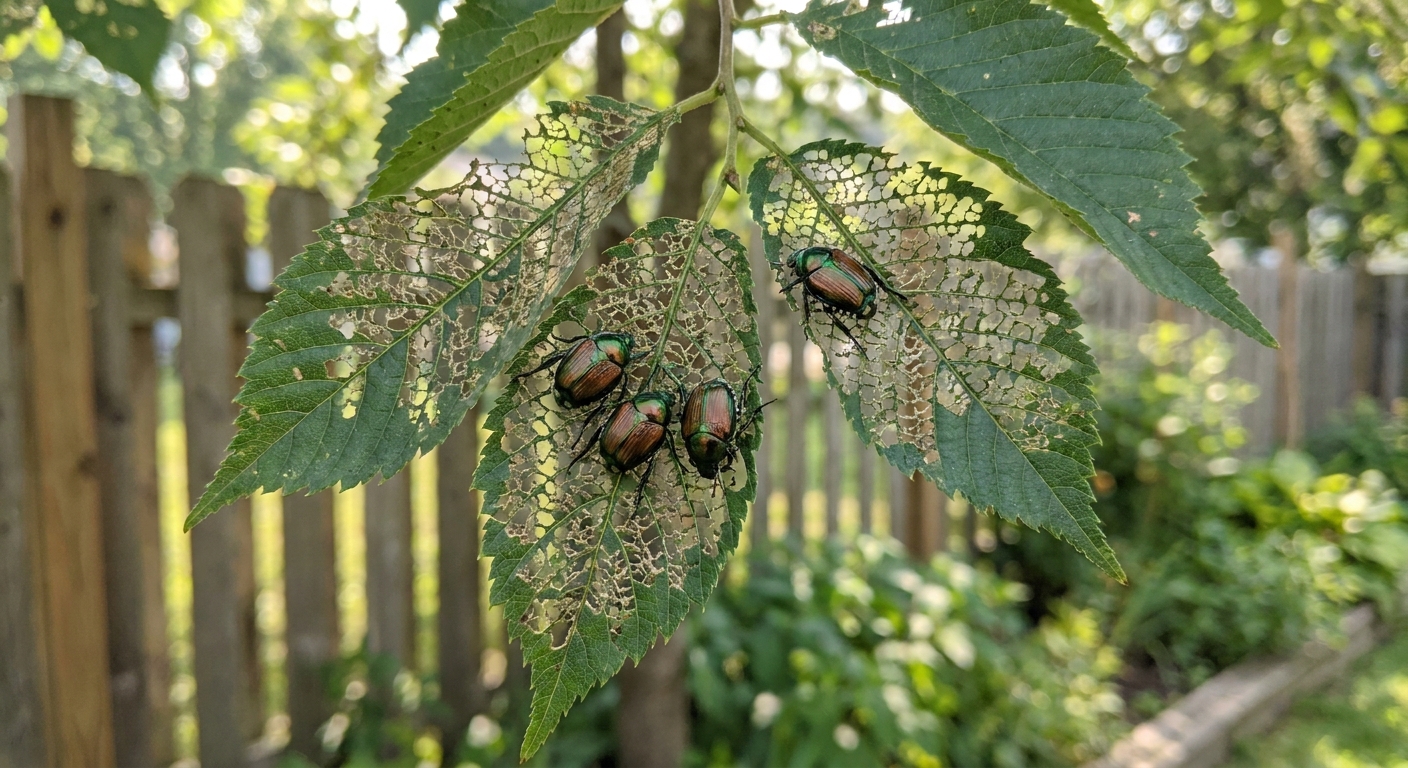
If you have noticed leaves on your trees turning into lace, with only the veins left behind, you have probably met the Japanese beetle. These metallic green and copper insects show up across the Nashville area every summer, usually emerging in June and feeding heavily through July and into August. A few beetles are no big deal. A swarm of them can defoliate a favorite tree in a matter of days.
Here is what New Horizon Tree Service wants Middle Tennessee homeowners to understand about these pests and how to keep your trees healthy through beetle season.
What Japanese Beetles Do to Trees
Adult Japanese beetles eat the soft tissue between the veins of a leaf, leaving a skeletonized, lace-like look. They tend to feed from the top of the tree down and often cluster in groups, because feeding beetles release a scent that attracts even more. Heavy feeding does not usually kill an established tree outright, but it stresses the tree, reduces its ability to make food through its leaves, and leaves it more vulnerable to drought, disease, and other pests, especially during the hot summer when trees are already under strain.
The Trees They Target Most
Japanese beetles have clear favorites. In Nashville-area yards, the trees and plants most at risk include:
- Lindens and basswood, which are among the most heavily attacked shade trees.
- Crabapples, cherries, and plums, including ornamental fruit trees.
- Japanese maple, a prized landscape tree that beetles will shred.
- Roses, grapes, and birch, along with many other ornamentals.
Oaks, magnolias, and most evergreens are far less appealing to them, which is why you may see one tree in your yard getting hammered while the one next to it is untouched.
What You Can Do
You have several options, and the right one depends on how bad the problem is:
- Hand-pick in the morning. On smaller trees and shrubs, knocking beetles into a bucket of soapy water early in the day, when they are sluggish, genuinely helps reduce the numbers and the scent that draws more.
- Skip the beetle traps. Those bag traps sold at hardware stores use scent lures that attract far more beetles to your yard than they catch. They usually make the problem worse, not better.
- Keep trees healthy. A well-watered, well-mulched, properly pruned tree shrugs off beetle damage much better than a stressed one. Vigor is your best long-term defense.
- Consider professional treatment. For valued trees under heavy attack, targeted treatments applied at the right time in the beetle cycle can protect the canopy. A certified arborist can tell you whether treatment is worth it for your specific trees.
When the Damage Is Already Done
If a tree has been defoliated, do not panic and do not start cutting. A healthy, established tree can usually recover from a season of beetle feeding, especially if you keep it watered through the rest of the summer. Avoid heavy pruning right after defoliation, since the tree needs every remaining leaf to recover. If a tree was already weak, declining, or repeatedly defoliated year after year, that is when it is worth having a professional assess whether it can bounce back.
Let a Certified Arborist Take a Look
Pest pressure is one of the clearest signs that a tree needs professional attention, because beetle damage often layers on top of existing stress or disease. Our ISA-certified arborists can identify what is really going on, recommend whether treatment makes sense, and keep your trees strong with the right trimming and care. If beetle damage has revealed a tree that is past saving, we can handle the removal safely too.
Worried about a tree this summer? Our Nashville tree service can help. Call New Horizon Tree Service at (615) 260-5303 for a free, no-pressure assessment.


