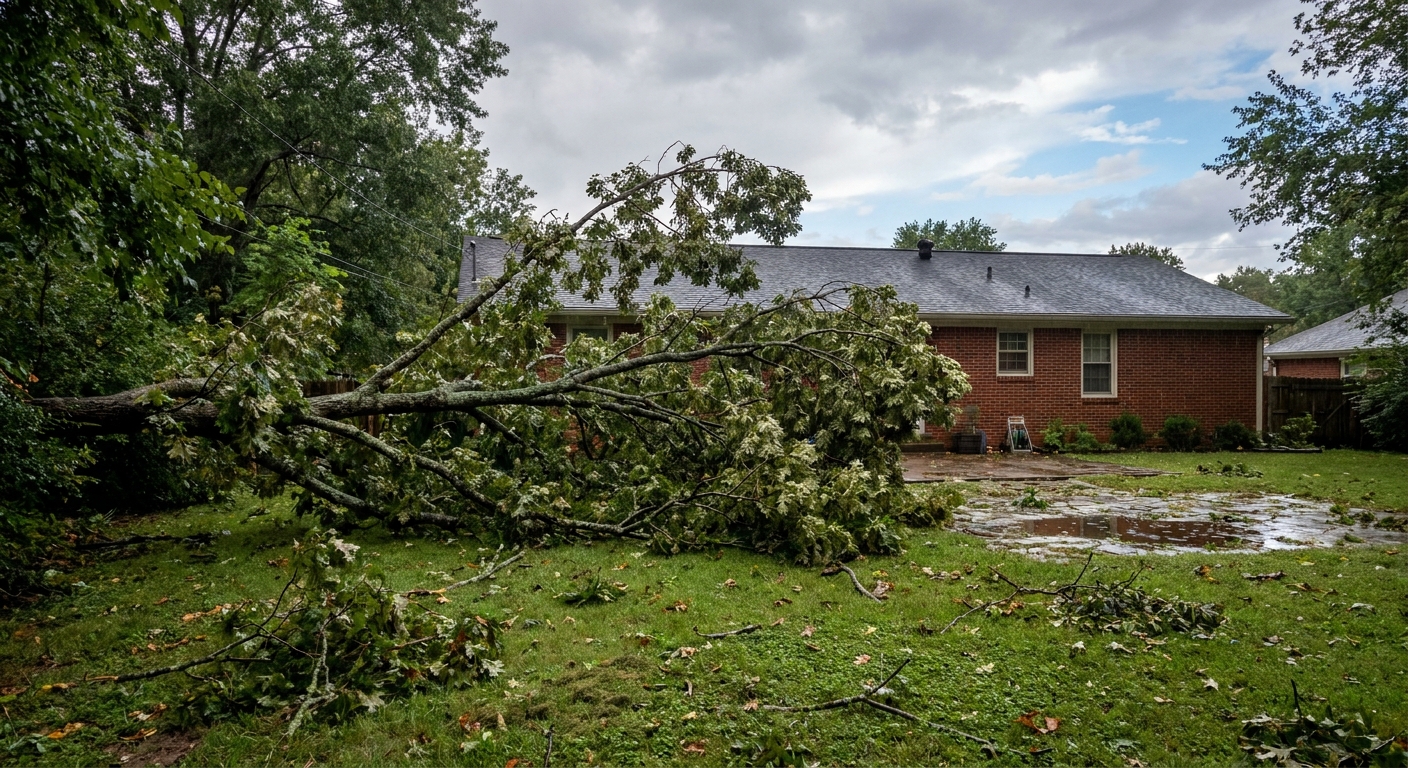
Middle Tennessee summers do not just bring heat. They bring fast, violent thunderstorms, straight-line winds, and the occasional severe weather outbreak. Add soil that is already saturated from a downpour and trees heavy with summer foliage, and it does not take much for a limb, or a whole tree, to come down. If that happens on your property, what you do in the first hour matters. Here is the step-by-step from our Nashville tree service.
Step 1: Stay Calm and Keep Everyone Away
The moment a tree comes down, the priority is people, not property. Keep family, kids, and pets well clear of the fallen tree and any damaged structure. A tree that has partially fallen or is hung up in other branches can shift or drop without warning. Do not walk underneath or around it to “see how bad it is.”
Step 2: Treat Every Downed Line as Live
If the tree took down power lines, or is tangled in them, assume the lines are energized and deadly. Stay far back, keep others away, and do not touch the tree, anything touching it, or any standing water near it. Call your utility and 911. Never try to move a limb off a power line yourself. This single mistake causes the most serious storm injuries.
Step 3: Check for Gas and Structural Danger
If a tree hit your home, smell for gas and listen for hissing. If you suspect a gas leak, get everyone out and call your gas utility from a safe distance. If a tree has punched into the roof or a wall, do not stay inside under the damaged area. Saturated ground and a leaning trunk can mean more movement is coming.
Step 4: Document Everything for Insurance
Once you are safe, photograph and video the damage from multiple angles before anything is moved: the tree, the structure, vehicles, fences, and the surrounding area. Note the date and time. This documentation is what your homeowners insurance will want, and it protects your claim. Make temporary notes of what happened while it is fresh.
Step 5: Call a Professional, Do Not DIY a Tree on a House
A tree on the ground in an open yard is one thing. A tree on your roof, leaning on a structure, hung up in other trees, or near power lines is dangerous, high-tension work that sends untrained homeowners to the hospital every storm season. The wood is under load and can snap or kick back violently when cut. This is exactly what our 24-hour emergency tree service exists for, and we respond quickly across the Nashville area.
Step 6: Make Safe, Temporary Fixes Only
While you wait for the crew, you can take low-risk steps: tarp an interior opening from inside if it is safe to do so, move vehicles that are not pinned, and rope off the hazard area so no one wanders into it. Leave the actual tree cutting, rigging, and removal to the professionals with the right equipment and insurance.
What Does Homeowners Insurance Usually Cover?
In general, if a storm-felled tree damages an insured structure like your house, garage, or fence, homeowners insurance often helps with the damage and removal, subject to your policy and deductible. A tree that falls in your yard without hitting a structure may not be covered for removal. Policies vary, so call your insurer early, and keep the documentation from Step 4. A reputable tree company can also provide the written assessment and invoice insurers typically ask for. Learn more on our storm damage page.
The Best Time to Prevent This Is Before the Storm
Most summer tree failures are not random. They start with weak spots a trained eye can catch in advance: dead or hanging limbs, cracks in major branch unions, leaning trunks, heavy one-sided canopies, and decay at the base. A pre-season inspection and some targeted tree trimming to remove deadwood and reduce wind resistance dramatically lowers the odds of a failure. If you have a tree that worries you every time the sky turns dark, that is your sign to have an arborist look at it now, not after it lands on the house.
Frequently Asked Questions
What should I do first when a tree falls on my house?
Get everyone safely away from the damaged area, assume any downed power lines are live and stay clear, check for gas if the tree hit the structure, and call 911 or your utility if there is any electrical or gas danger. Once safe, document the damage with photos and call a professional emergency tree service. Do not try to cut a tree off a house yourself.
Does homeowners insurance cover storm tree removal in Nashville?
Often, yes, when a storm-felled tree damages an insured structure such as your house, garage, or fence, your policy may help with both the damage and removal, subject to your deductible and coverage. A tree that falls in the yard without hitting a structure may not be covered. Call your insurer early and keep photo documentation.
Why should I not remove a fallen tree myself?
A fallen or leaning tree is under enormous tension and can snap, roll, or kick back when cut, causing severe injuries. Trees on roofs, tangled in other trees, or near power lines are especially dangerous. Professional crews have the rigging, training, and insurance to remove them safely.
How can I prevent summer storm tree damage?
Have an arborist inspect your trees before storm season and address weak points: remove dead or hanging limbs, reduce heavy one-sided canopies, and check for cracks, leans, and decay at the base. Proactive trimming to reduce wind resistance significantly lowers the chance of a failure.
Talk to a Local Arborist
A storm-damaged or storm-prone tree should not wait. Call New Horizon Tree Service at (615) 260-5303 for a free, no-pressure estimate. New Horizon is a local Nashville tree service trusted from Franklin to Antioch, fully licensed and insured, and our ISA-certified arborists are happy to take a look.


